Why is my roof leaking after patching it in Killeen
Patched the roof and it still leaks? Here are the real reasons roof patches fail in Killeen, how to find the true leak source, and when to call a pro.
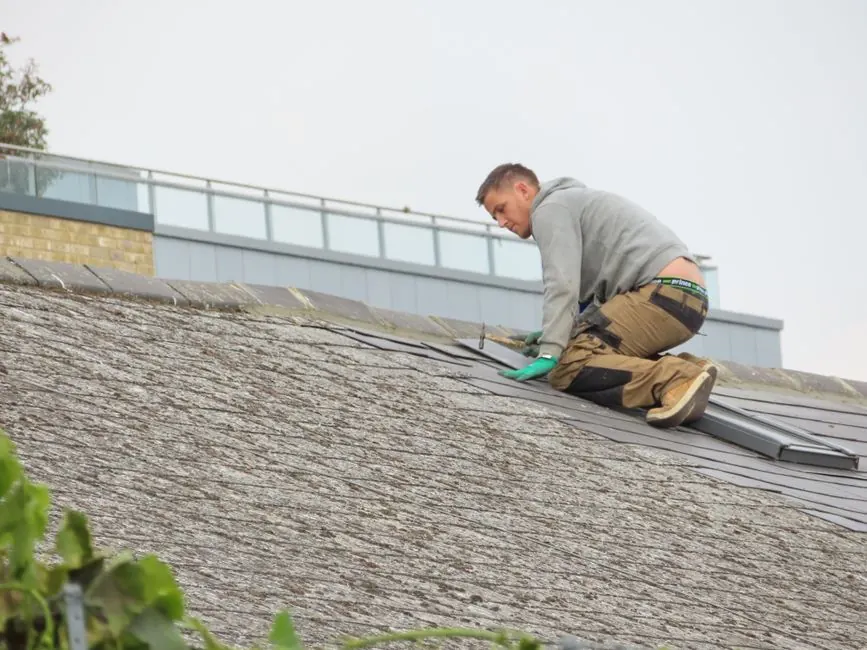
If your roof is still leaking after you patched it in Killeen, the patch almost certainly missed the actual entry point - water rarely drips straight down from the hole it enters. On a typical Killeen home, the visible stain on your ceiling can sit 10 to 15 feet away from the real breach, which is why so many DIY patches fail within days.
Why is my roof leaking after patching it in Killeen TX is one of the most common calls we get, and the answer usually comes down to one of seven causes. Below we walk through each one, how to spot it, and what it actually takes to stop the water for good.
The Short Answer: Why Your Patch Did Not Stop the Leak
A roof patch fails in Killeen when the water source is not the spot you sealed. Roof patch repair is the process of sealing a specific damaged area - a torn shingle, a punctured membrane, a rusted metal panel - and it only works when the diagnosis is correct. If the leak is coming from failed flashing, a cracked pipe boot, or water tracking along the decking from 12 feet uphill, the patch is doing its job on a spot that was never the problem.
We see this constantly in Killeen, where afternoon thunderstorms push water sideways and uphill under shingle laps. A patch that looks perfect from the ladder can still let water in from three feet away. That is why we always trace the leak back to its source before we touch a tube of sealant.
1. You Patched the Wrong Spot
Water is lazy and follows the path of least resistance, which is almost never a straight line. It enters at a nail pop, a lifted shingle, or a gap in the flashing, then runs along the roof deck, down a rafter, and drips from the lowest point it can find.
Here is what that means in practice:
- You see a ceiling stain in a hallway, but the entry point is 8 to 15 feet away near a chimney or vent.
- You patch the shingle directly above the stain, and the leak continues because the real gap is uphill.
- You seal a visible crack, but the water is actually coming in through a nail head two rows up.
The fix is to stop chasing the stain and start chasing the water. Get into the attic during or right after a hard rain with a flashlight. Follow the wet streak upward along the rafters until it disappears. That is your entry point, not the drip.
2. Water Is Traveling Along the Deck Before It Drips
Roof decks in Killeen homes built before 2000 are usually 1/2-inch plywood, and once water gets into the wood grain, it can travel horizontally for 10 feet or more before it finds a seam to drip through. This is the single most common reason a roof still leaking after repair in Killeen TX keeps showing up in the same ceiling spot even after a fresh patch.
You can spot deck-level travel by looking for a dark, damp band on the underside of the sheathing rather than a single wet spot. If the wood is stained in a line, the water is running along it. A patch on the shingle above the drip will never stop that.
We see this most often on homes near Roof Patch Repair in Downtown Killeen, where the older housing stock has tighter attic spaces and less ventilation, so moisture lingers and rot spreads faster. If your attic smells musty after a rain, deck travel is a strong suspect.
3. The Flashing Is the Real Problem, Not the Shingle
Flashing - the metal that seals roof-to-wall, roof-to-chimney, and roof-to-vent junctions - causes more leaks than shingles do. A shingle can be cracked for a year without leaking. Flashing that has pulled loose or lost its sealant will leak on the first hard rain.
The three flashing failures we fix most in Killeen:
- Pipe boots. The rubber collar around plumbing vents cracks in 5 to 8 years under Texas UV. Once it splits, water runs straight down the pipe into your attic.
- Step flashing. Where a roof meets a sidewall, step flashing can lift or corrode. Water gets behind it and into the wall cavity.
- Chimney counter-flashing. The mortar cap and counter-flashing on brick chimneys crack with thermal movement, opening a gap that sealant alone will not hold.
If your patch was on the shingle field but the leak is at a pipe boot or sidewall, you sealed the wrong material. Flashing repairs require metal work, not caulk.
4. Killeen Heat and Hail Destroyed the Patch Material
Killeen sits in one of the harshest roofing climates in Texas. Summer attic temperatures routinely hit 140 to 150 degrees Fahrenheit, and surface shingle temps can exceed 160. That kind of heat cooks cheap sealants, turns them brittle, and pulls them away from the surface within one season.
Hail is the other half of the equation. Killeen and the surrounding Fort Hood area see multiple hail events per year, and even dime-sized hail can bruise asphalt shingles, knocking the granules loose and leaving the mat exposed. A patch applied over bruised shingles will fail because the shingle underneath is already compromised.
If your patch was applied in spring and failed by August, heat and UV are the likely culprits. We use UV-rated sealants and, where it makes sense, replace the damaged shingle rather than seal over it - that is the difference between a patch that lasts 12 months and one that lasts 10 years.
5. The Underlayment or Decking Is Already Rotted
You cannot patch a roof back to health if the layer under the shingle is gone. When water has been getting in for months, the felt underlayment rots and the plywood decking softens. A patch on top of that is cosmetic.
Signs the deck is compromised:
- The roof feels spongy when you walk it.
- Nails pull out easily or the shingle tabs lift without resistance.
- You can see dark, crumbling wood from the attic side.
- The leak reappears in a different spot within weeks of patching.
In these cases, the repair is a deck replacement plus new underlayment plus new shingles over that section. That is a bigger job than a patch, but it is the only one that stops the water.
6. You Sealed Over a Leak That Needed Replacement
Roofing sealant is a tool, not a cure. It works on small, stable gaps - a lifted nail head, a hairline crack in a vent flange, a loose shingle tab. It does not work on open tears, missing shingle sections, or metal panels that have rusted through.
We see homeowners in Killeen use half a tube of sealant on a 4-inch tear and then wonder why it still leaks after the next storm. The sealant bridges the gap for a few weeks, then the water pressure and thermal movement push it out. The correct fix is a mechanical patch - a piece of matching shingle or membrane set into the field and fastened, not just glued.
Common Mistakes We See on Killeen Roof Patches
After years of fixing failed DIY patches across Bell County, the same mistakes show up again and again. Here is what to avoid:
- Patching the ceiling stain instead of the entry point. The stain is a symptom, not the source.
- Using silicone caulk on asphalt shingles. Silicone does not bond to asphalt. Use asphalt-compatible roof cement or a proper patch.
- Patching in the rain or on a wet roof. Sealant will not adhere to a wet surface, period.
- Walking the roof in 100-degree heat. You will tear shingles and create new leaks.
- Ignoring the attic. If you have not looked inside, you have not diagnosed the leak.
- Sealing over hail bruises. The shingle is already failing; sealing it just hides the damage.
One more thing: if your home is in one of the older neighborhoods near Roof Patch Repair in Historic Downtown Killeen, the roof may have multiple layers of shingles. Patches on multi-layer roofs are trickier because water can travel between the layers. We always check the layer count before we quote a repair.
How to Diagnose a Roof Leak That Keeps Coming Back
If your roof leak keeps coming back in Killeen, stop patching and start diagnosing. Here is the process we use on every call:
- Attic inspection first. We go inside, find the wet streak, and trace it uphill to the entry point. This takes 10 to 15 minutes and saves hours of guesswork.
- Roof-level inspection. We check the entry point, then examine every flashing detail within 15 feet - pipe boots, sidewalls, valleys, and chimney.
- Water test. If the source is still unclear, we run a controlled water test from a hose, one section at a time, and watch the attic until the drip appears.
- Material check. We test the shingle for hail bruising and check the deck for soft spots. If the deck is bad, we tell you before we patch.
- Repair and verify. We make the repair, then re-test with water before we leave. No guesswork.
That process is why we rarely get callbacks on leaks. The patch is the last step, not the first.
If the leak is active right now and water is coming into a living space, that is an emergency roof leak repair Killeen TX situation - we can stop the water and then schedule the permanent fix. For most asphalt shingle roofs, the permanent repair is a shingle roof patch repair Killeen TX done with matching material and proper fastening. If you have a flat or low-slope section over a garage or addition, that is a flat roof patch repair Killeen TX job, and the materials and methods are completely different.
When to Call a Professional
Call a professional when the leak has survived two patch attempts, when water is entering a living space, or when you see sagging, soft decking, or mold in the attic. Those are signs the problem is structural, not cosmetic.
We handle Roof Patch Repair Killeen TX every week - from single pipe boot replacements to full valley rebuilds. We find the leak, fix it, and water-test it before we leave. If you are not sure whether your situation is a patch or a replacement, we will tell you straight.
Frequently Asked Questions
Why is my roof leaking after patching it in Killeen TX?
The patch missed the actual entry point. Water travels along the deck and flashing before it drips, so the ceiling stain is often 10 to 15 feet from the real breach. Flashing failures, cracked pipe boots, and rotted underlayment are the most common culprits on Killeen roofs.
What causes a roof to leak after repair in Killeen?
Three things: wrong diagnosis (patched the stain, not the source), failed materials (cheap sealant cooked by 140-degree attic heat), and hidden damage (rotted decking or a second shingle layer trapping water). Any one of these will defeat a patch within weeks.
How do I fix a roof leak that keeps coming back in Killeen Texas?
Stop patching and diagnose. Get in the attic during a rain, trace the wet streak uphill to the entry point, and inspect every flashing detail within 15 feet. If the deck is soft, the section needs replacement, not another layer of sealant. A water test confirms the fix before you close it up.
Should I call a roof repair professional in Killeen for a persistent leak?
Yes, if the leak has survived two patch attempts or water is entering a living space. A pro can trace the source in 15 to 30 minutes, check for hail bruising and deck rot, and water-test the repair. That is usually cheaper than a third DIY attempt plus ceiling repairs.
How much does it cost to fix a roof leak after patching in Killeen?
Typical 2026 pricing in the Killeen area runs $250 to $600 for a straightforward patch with diagnosis, and $800 to $2,500 if flashing replacement or deck repair is needed. Emergency after-hours calls add $150 to $300. The diagnosis is what determines the price.
Get Help With Roof Patch Repair in Killeen
If your patch failed and the leak is back, we can find the real source and fix it right the first time. Call Roof Bandage at +1 (254) 355-1550 and we will get a technician out to trace the leak, water-test the repair, and stop the water for good.